



Strengthening vascular care across the UK — Perimed and HC 21 UK
by Liuting Xu (Global Distribution Manager)
Perimed recently entered into a partnership with HC 21 UK — one of Europe’s largest medtech providers— enabling us to expand our reach to clinicians throughout the UK, providing access to noninvasive diagnostic solutions for peripheral vascular assessment.
Our partnership with HC21 covers PeriFlux 6000, our comprehensive vascular assessment solution, and PeriCam PSI for real-time perfusion imaging. It forms part of our strategy to scale sustainably in key markets while ensuring that UK customers have access to dedicated local expertise and high-quality after-sales support.

Why the UK market is strategic
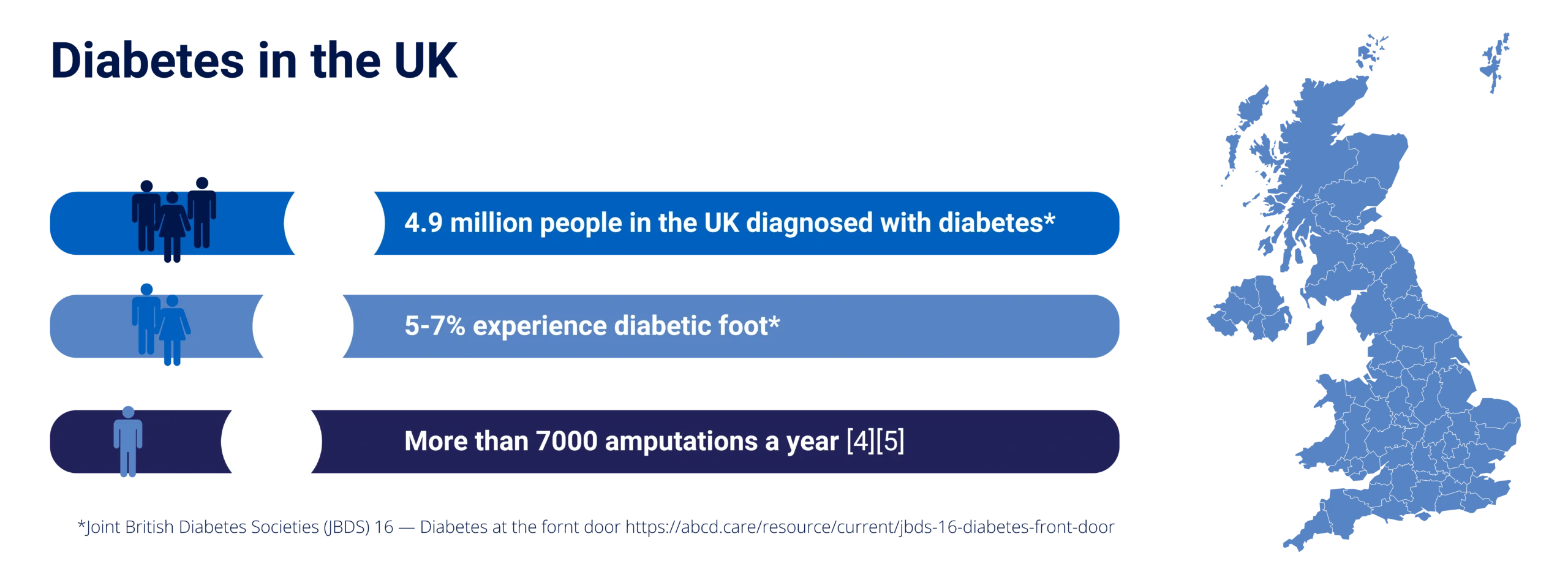
Our instruments, PeriFlux 6000 and PeriCam PSI, provide measurements to assess people with a range of vascular diseases and conditions, such as suspected peripheral artery disease (PAD) and diabetic foot. PAD affects about 20% of the UK population aged 55-75 [1] — more than 2 million people. Two-thirds are asymptomatic [2]. People are unaware they are ill, but this can be prevented in 85% of cases [3].
Every year in the UK, nearly 7,000 people lose a limb because of diabetic foot complications [4][5]. For many, amputation marks the beginning of a steep decline — with a five-year mortality rate of 50%, exceeding that of several common cancers [6]. This is not inevitable. With earlier identification of at-risk tissue, structured clinical workflows, and the right diagnostic technologies — supported by clear healthcare priorities — many amputations could be avoided.
Our instruments offer comprehensive support for early patient assessment, especially for high-risk groups like people with diabetes, who are prone to complications like arterial calcification, chronic wounds, and critical limb-threatening ischemia (CLTI).
Basic measurements, like ABI, may be falsely elevated in such patients. To address the unique challenges presented by these conditions, PeriFlux 6000 offers a wide range of additional macrocirculation exams beyond ABI and TBI, as well as microcirculation insights that are crucial for understanding disease progression and for assessing wound healing.
What it means for patients
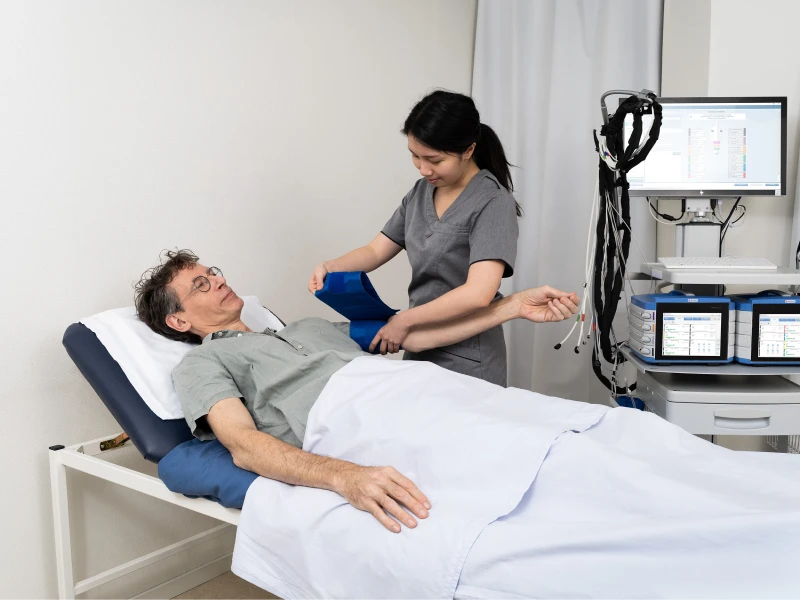
To maximize patient comfort, all exams carried out with PeriFlux 6000, including SPP and TcpO2, use noninvasive sensors. The exams are bearable for most patients, preparation is simple, and the tissue being measured isn’t disrupted by the measurement sensor or agents.
PeriCam PSI assesses perfusion without touching the skin and without injecting contrast agents. The examination is quick and contactless, which can be especially important for patients in pain, with fragile skin, or with existing wounds.
What it means for clinicians
Our instruments leverage laser Doppler technologies and advanced signal processing to deliver consistent measurements over time, facilitating patient follow-up by enabling clinicians to confidently compare pre- and post-treatment measurements to assess therapy effectiveness. Exams are designed for effective patient prep and are aligned with the clinical workflow to minimize the load on clinical staff.
Together with HC21 UK, Perimed is helping to address one of the UK’s most urgent vascular challenges: preventable limb loss. By enabling earlier microcirculatory assessment and providing clear diagnostic insight, this partnership supports clinicians in intervening before tissue loss becomes irreversible.
For more information about HC 21 UK, visit: https://healthcare21.eu/
For more about Perimed, visit: https://www.perimed-instruments.com/
Global Distributor Manager
As Perimed’s global distributor manager, I work with partners around the world to bring advanced vascular diagnostic solutions to local healthcare providers. With a deep understanding of global medical markets, I am dedicated to helping clinicians make a difference.
I hold a master’s degree in bioentrepreneurship from Karolinska Institute in Stockholm, Sweden.

References
[1] Kyle, D., Boylan, L., Wilson, L., Haining, S., Oates, C., Sims, A., Guri, I., Allen, J., Wilkes, S., & Stansby, G. (2020). Accuracy of Peripheral Arterial Disease Registers in UK General Practice: Case-Control Study. Journal of primary care & community health, 11, 2150132720946148. https://doi.org/10.1177/2150132720946148
[2] Virani, S. S., Alonso, A., Aparicio, H. J., Benjamin, E. J., Bittencourt, M. S., Callaway, C. W., Carson, A. P., Chamberlain, A. M., Cheng, S., Delling, F. N., Elkind, M. S. V., Evenson, K. R., Ferguson, J. F., Gupta, D. K., Khan, S. S., Kissela, B. M., Knutson, K. L., Lee, C. D., Lewis, T. T., Liu, J., … American Heart Association Council on Epidemiology and Prevention Statistics Committee and Stroke Statistics Subcommittee (2021). Heart Disease and Stroke Statistics-2021 Update: A Report From the American Heart Association. Circulation, 143(8), e254–e743. https://doi.org/10.1161/CIR.0000000000000950
[3] Wilson D. J. (2005). Amputation and the diabetic foot: learning from a case study. British journal of community nursing, 10(12), S18–S24. https://doi.org/10.12968/bjcn.2005.10.Sup4.20145
[4] Hingorani, A., LaMuraglia, G. M., Henke, P., Meissner, M. H., Loretz, L., Zinszer, K. M., Driver, V. R., Frykberg, R., Carman, T. L., Marston, W., Mills, J. L., Sr, & Murad, M. H. (2016). The management of diabetic foot: A clinical practice guideline by the Society for Vascular Surgery in collaboration with the American Podiatric Medical Association and the Society for Vascular Medicine. Journal of vascular surgery, 63(2 Suppl), 3S–21S. https://doi.org/10.1016/j.jvs.2015.10.003
[5] Chamberlain, R. C., Fleetwood, K., Wild, S. H., Colhoun, H. M., Lindsay, R. S., Petrie, J. R., McCrimmon, R. J., Gibb, F., Philip, S., Sattar, N., Kennon, B., & Leese, G. P. (2022). Foot Ulcer and Risk of Lower Limb Amputation or Death in People With Diabetes: A National Population-Based Retrospective Cohort Study. Diabetes care, 45(1), 83–91. https://doi.org/10.2337/dc21-1596
[6] Armstrong, D. G., Swerdlow, M. A., Armstrong, A. A., Conte, M. S., Padula, W. V., & Bus, S. A. (2020). Five year mortality and direct costs of care for people with diabetic foot complications are comparable to cancer. Journal of foot and ankle research, 13(1), 16. https://doi.org/10.1186/s13047-020-00383
Disclaimer
The views expressed in this blog post are those of the author and do not necessarily represent the official position of Perimed. The content is provided for informational purposes only and is not intended to constitute clinical claims or medical advice. Clinical decisions should always be based on professional judgment and applicable clinical guidelines.